
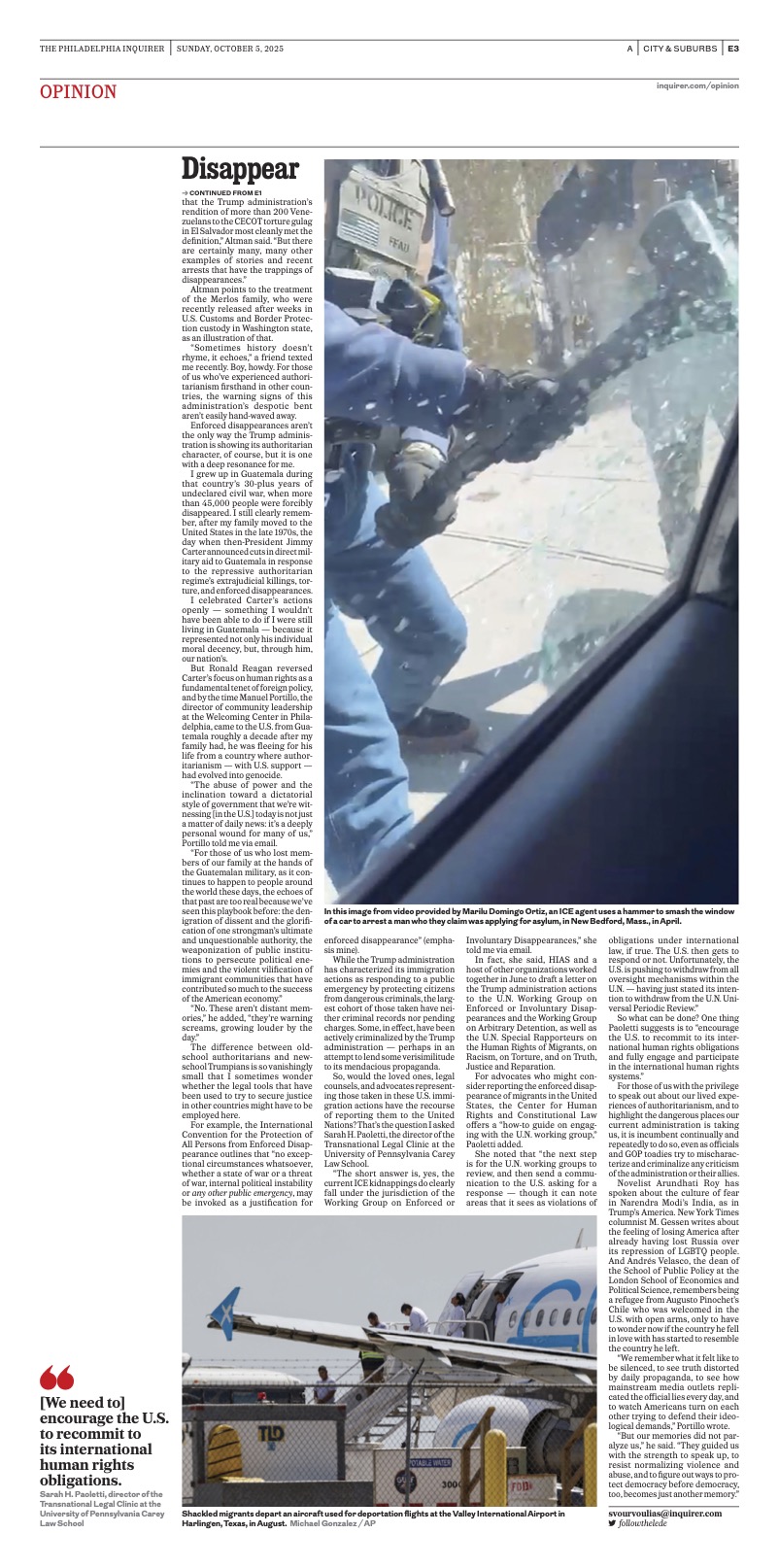
Read it online:
‘Say it with me: Our government is forcibly disappearing people’
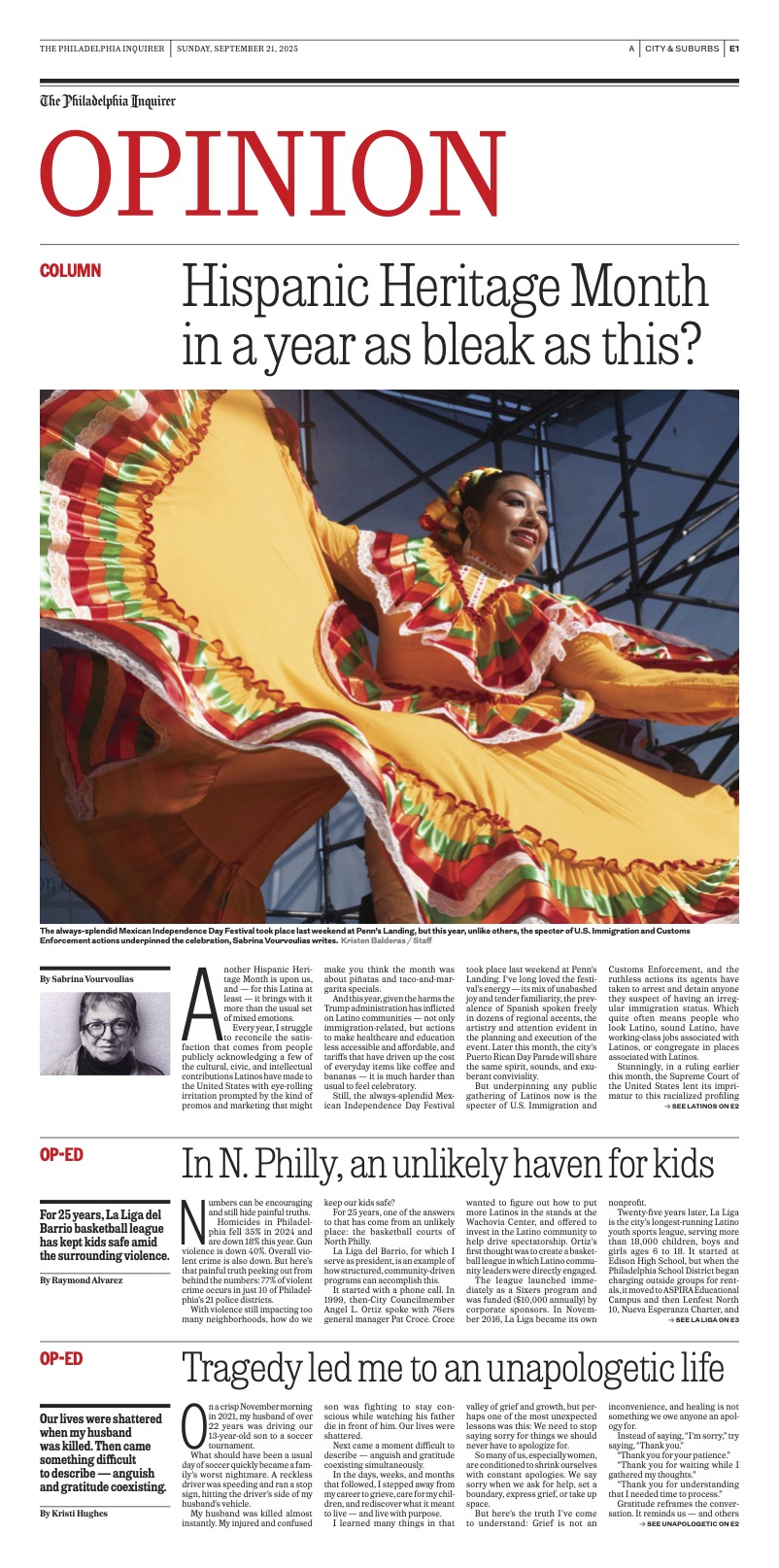
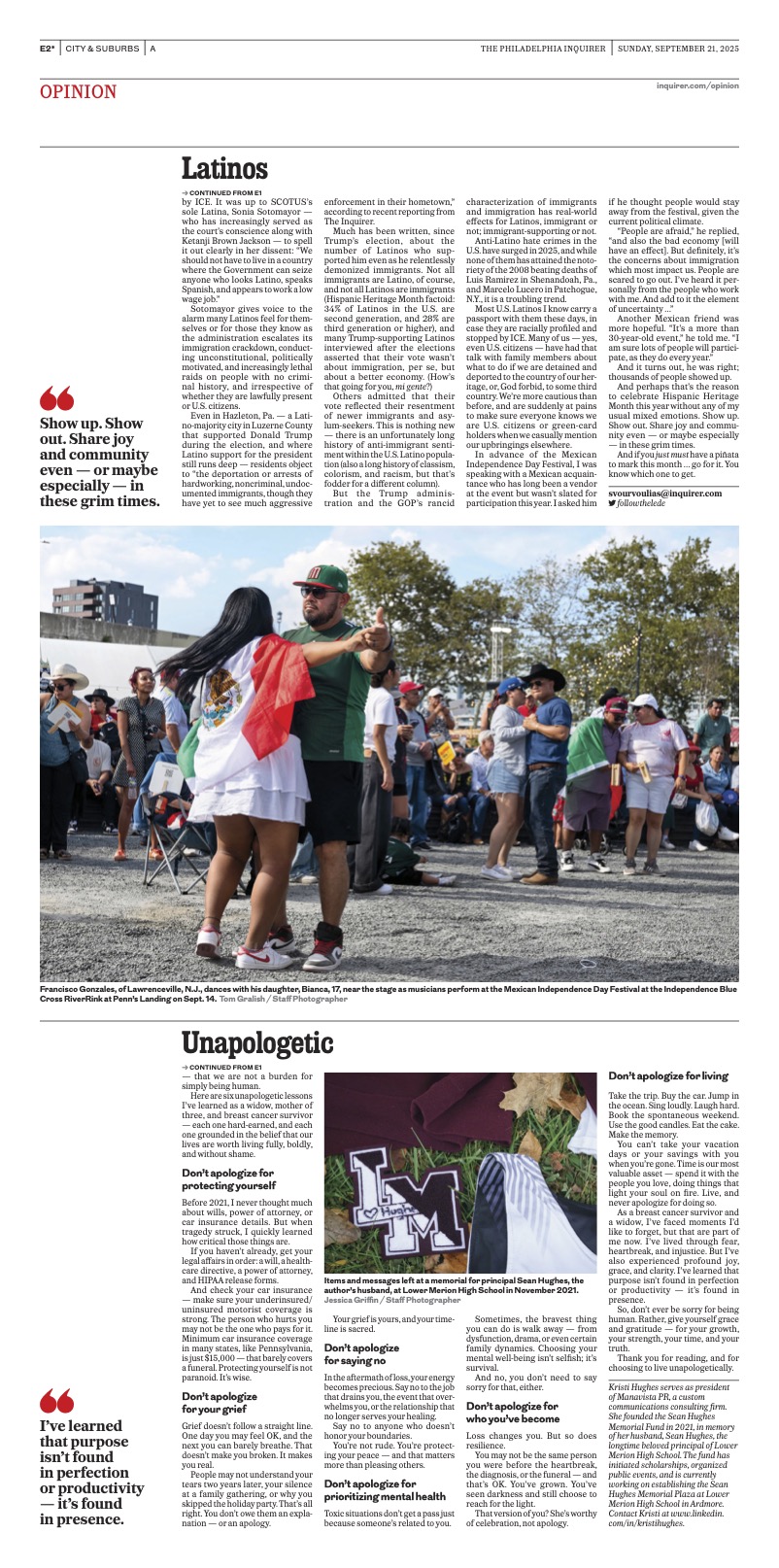
Read it online:
In a bleak 2025, I’m having a hard time celebrating Hispanic Heritage Month this year


As the second Trump Administration gets underway, the Brooklyn Defenders in association with the ACLU and other organizations, have produced a number of “We Have Rights” videos that can be instrumental in ensuring that immigrants who may be targeted by ICE know that they have rights at every stage of interaction with that agency.
Available in seven languages (Spanish, Krèyol, Mandarin, Urdu, Arabic, Russian and English), the videos can also help allies who document ICE agents interactions with immigrants. Further, if you are the member of a faith or community organization, you can schedule a screening of the videos.
Here is one of the videos:
The website has other resources as well, including how to create an emergency plan.
More to read and think about right now:
Immigration arrests in the workplace will harm all Pennsylvania workers

My speculative novel, Ink (first published in 2012 and reissued by Rosarium Publishing in 2018, during Trump’s first term) outlined what an immigration dystopia might look like — but also the ways communities and allies can work together to protect each other.

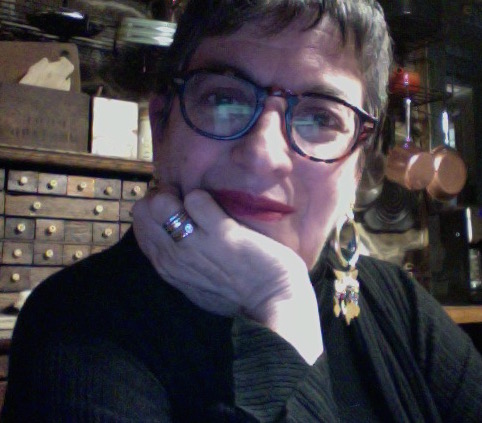
Philadelphia journalist Sabrina Vourvoulias is joining The Philadelphia Inquirer as the organization’s first Senior Editor, Communities and Engagement. In this role, Vourvoulias will lead The Inquirer’s Community News Desk and will focus on centering the region’s diverse communities in The Inquirer’s journalism.
— Joseph Lichterman, The Lenfest Institute, Oct. 27, 2021
Read more here.

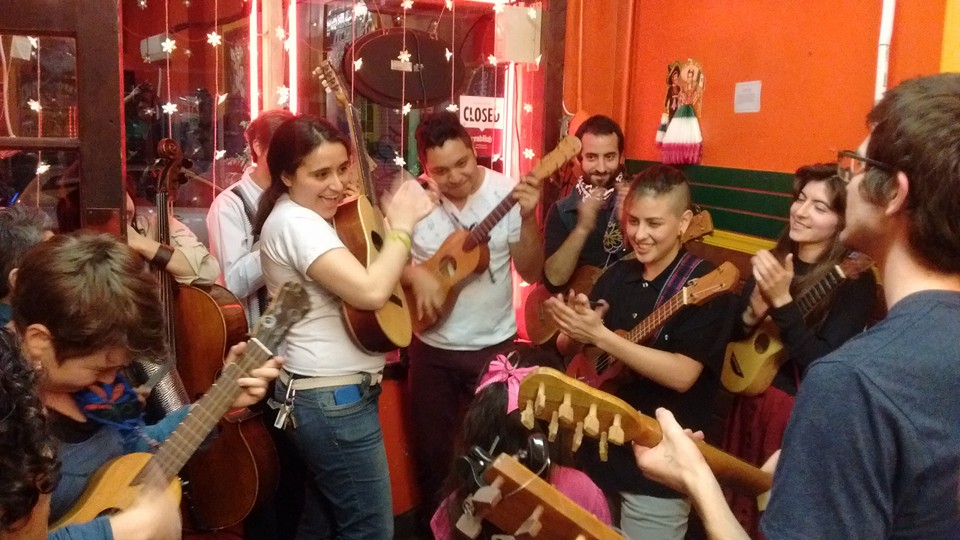
Yared Portillo, a Philadelphia community activist, has four of them: One she built from scratch; two others were secured from renowned artisans; the final one — received broken and in pieces from a friend — she carefully repaired and made whole again.
The repaired instrument isn’t a bad metaphor for the role the jarana has played in the US immigration protest movement for the past two decades. It’s a small, eight-string instrument from Veracruz, Mexico, patterned after a 16th century baroque Spanish guitar that is often confused with a ukulele.
In the hands of Chicanos or recent Mexican immigrants, the jarana — as well as the son jarocho musical form with which it is inextricably associated — energizes rallies and undergirds the chants of those who want to repair not only a broken immigration system, but the increasingly broken relationship between two nations sharing both borders and histories.
Read the rest of the article at PRI’s The World: What does protest sound like?



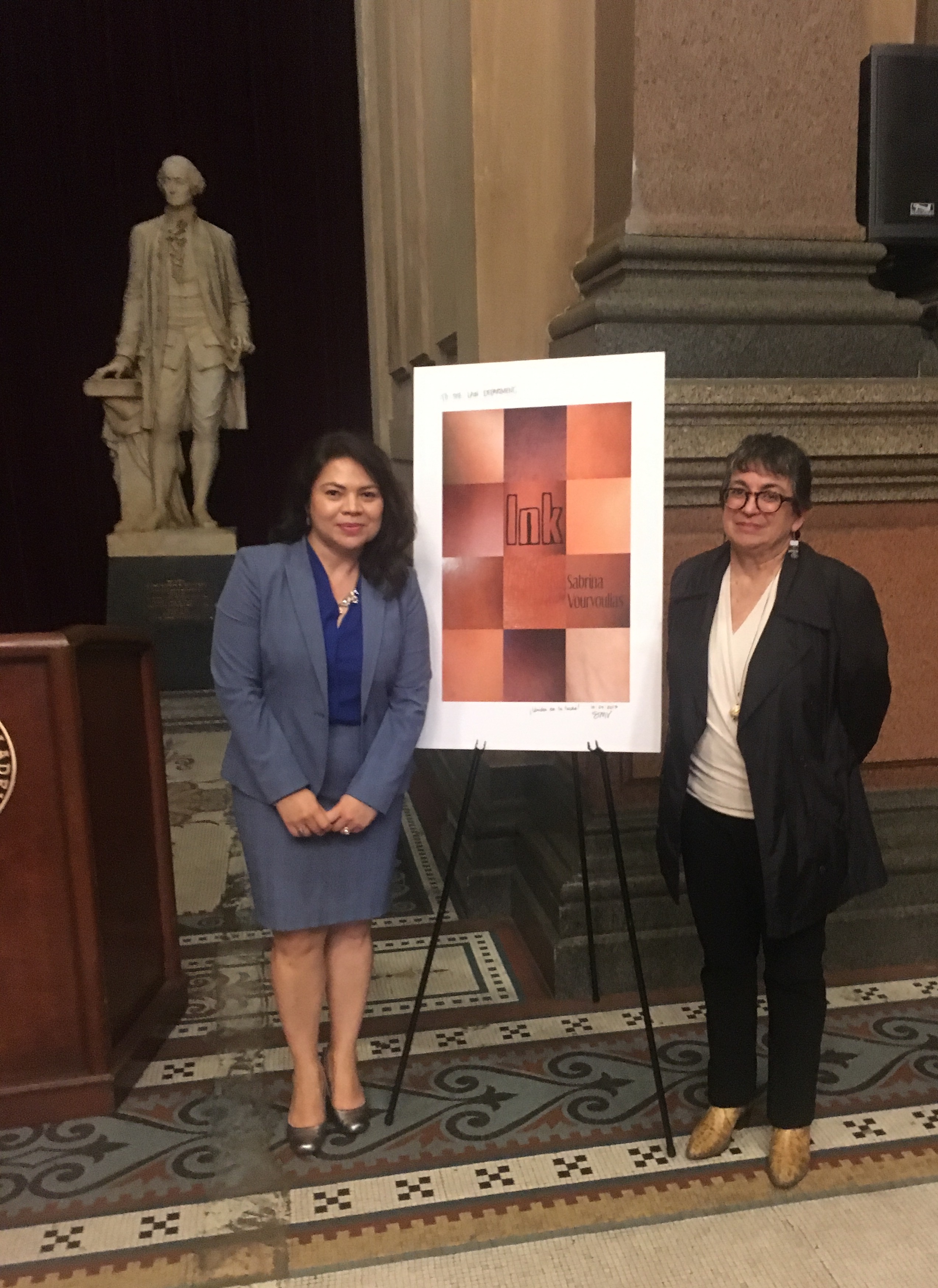
And, a thank you to the Law Department of the City of Philadelphia for inviting me to speak and read from my work at City Hall on Oct. 25:




So apparently Facebook has something against one of the most established and important Chicano, Xicana & Latinx blogs on the internet and will not let it be shared via FB. Beyond the ridiculousness (is that a word?) of the ban, it is a huge loss for Latinx lit — many of us have discovered great poetry and fiction through Em Sedano’s reviews and Rudy Ch. Garcia’s lists; we’ve delighted in Melinda Palacio’s poetry and life posts, and let SFF writer Ernest Hogan take us on the wild ride of his Chicanonautica. Not being able to share La Bloga, in part or in whole with friends and colleagues, on Facebook is a very real loss.
So, until Facebook changes its wrongheaded ban, I’ll be linking many of La Bloga’s posts here, and posting this to my Facebook page — a kind of underground La Bloga until the venerable site can emerge from the shadows …
This week in La Bloga: La Bloga Flor y Canto: Despedida y Celebración Con Musica, Poesía, and Fabulous Comida
¡Unidos en la lucha!
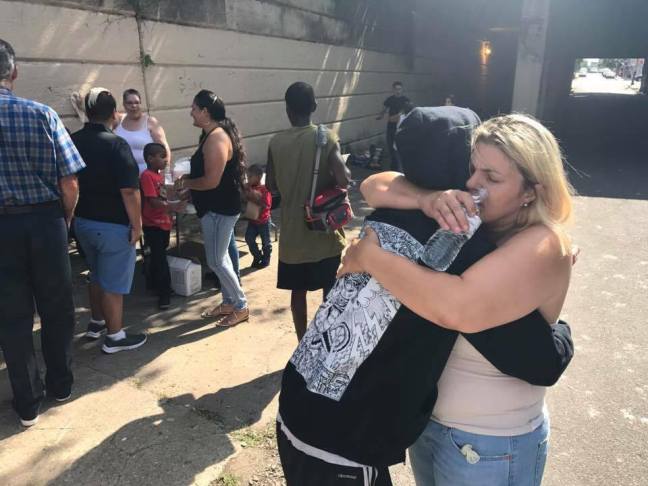
“I kept asking [the organizers of the cleanup at Second and Indiana], ‘Where, where is the place that is going to take these individuals?’”

Everyone from Dr. Oz to the BBC has now done a piece on the heroin camp in Kensington. Some of the pieces have been good, others are simply poverty and addiction porn. All of them have come from outside the community most impacted by both the existence of the camp and its cleanup. To get beyond one-shot sensationalism, what we need now is coverage that centers the voices of people like Jessie Alejandro-Cruz and Charito Morales — who have been grappling with not only the implications but the actuality of this for decades.
Read my full commentary here.


It looks at the deportation stories of two men: Mout Iv, who was deported to Cambodia, and César, who was deported to Mexico, after a lifetime in the United States. It also looks at the changing definition of criminal deportations over the years…
Read more here.

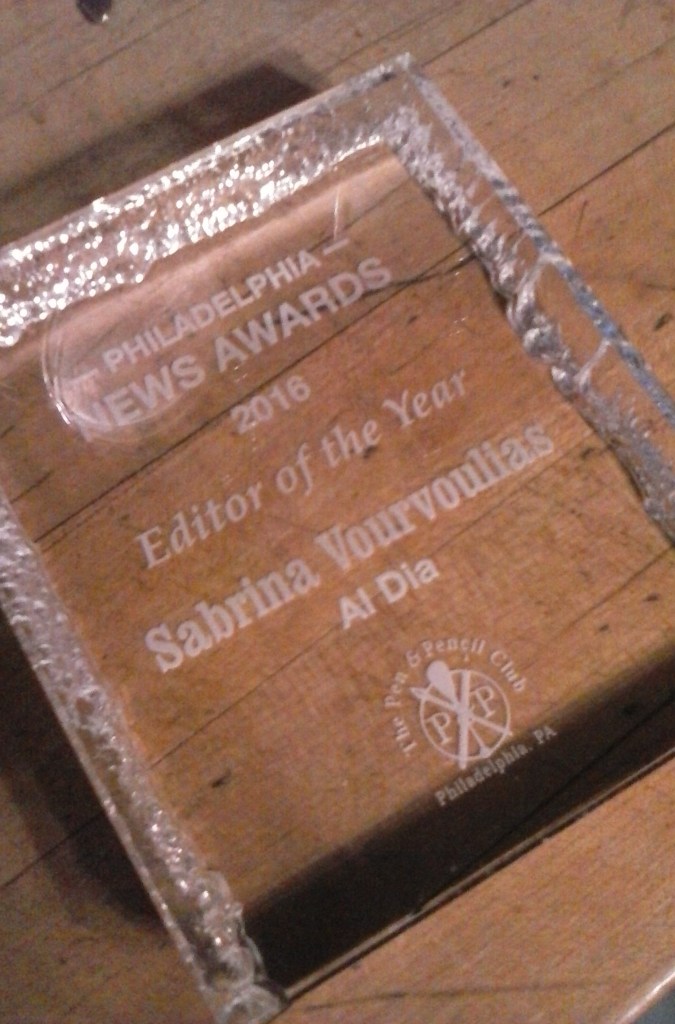
So in an unexpected turn of events, last Thursday night, I won the Philadelphia News Awards 2016 Editor of the Year for my work at Al Día before I left that organization.
Max Marin, one of the reporters whose work I edited in that position, also won an award for his freelance writing since leaving Al Día earlier this year. Emma Restrepo, a freelancer at Al Día who I also had the honor to work with during my stint there, was also nominated for the freelancer of the year award.
While the other reporters I edited and worked with during my four years at Al Día haven’t gotten this particular recognition, they are wonderful journos who deserve many kudos: Ana Gamboa, Arturo Varela, Christine Killion, Samantha Madera, Peak Johnson, Pilar Casi, Lucia Tejo, Martin Martinez, Roberto Luzardo … I expect grand things from them in their assorted post-Al Día ventures.
In any case, my gratitude for this professional recognition goes to the Pen & Pencil Club; to the peers who nominated me and, of course, to the people who voted for me! I am honored and humbled — especially given the caliber of my fellow nominees: Jessica Griffin, Philadelphia Daily News; Sheila Simmons, Philadelphia Tribune; Chris Hepp, Philadelphia Inquirer, and Patrick Kerkstra, for his work at Philadelphia Magazine before his departure this year.
I’m hoping that the Philadelphia Reentry Reporting Collaborative, of which I am project editor now, will — through the extraordinary work of the media organizations and journalists who are taking part — earn a spot in the nominations for investigative reporting in the 2017 iteration of the awards.


When my parents moved us from Guatemala City to Chester County in the mid-1970s, we were the first Latino family to move into our neighborhood – and, undoubtedly, the first people to chatter with each other in Spanish at the annual oxtail roast at the local firehouse.
The area we moved to was rural, within hailing distance of the towns of Downingtown, Coatesville and Exton, and my mother haunted the supermarkets in each of them, searching for a way to make frijoles volteados, the refried black beans that are part of every Guatemalan meal. It is hard to imagine now, but those stores didn’t stock black beans back then. My mother resorted to scouring the canned soups, looking for Campbell’s black bean soup, with which she could (ingeniously and magically) replicate a passable version of the bean dish she used to call “the Guatemalan caviar.”
But had my mother lived long enough, she would have witnessed a sea change on those Chesco supermarket shelves. Because even more than the sudden (and gratifying) proliferation of small ethnic food shops, there is no easier way to mark demographic changes than by walking into a “general interest” supermarket and noting what is offered in its produce section.
Read the rest of this column at City and State PA.
 Sabrina Vourvoulias