In what is becoming something of a tradition, the night before a Donald Trump Philly visit, something media-memorable happens.
Last week it was Marco Gutierrez, the co-founder of Latinos for Trump, on MSNBC warning that one of the dire consequences of continued immigration would be “taco trucks on every corner.”
Then last night — in advance of Trump’s scheduled appearance at the Union League today — Trump’s social media team allowed a tweet to go out marking anti-feminist Phylllis Schlafly’s death … only it was spelled “Phillies” Schlafly.
Uh, oh. Guess the Donald’s got Philadelphia on his mind — and probably not because of the ho-hum season the fourth-place NL East team is having.
Gwen Snyder hopes to transform her experience into a movement toward justice.
The U.S. Department of Justice defines a sexual assault as any kind of sexual contact or behavior that occurs without the explicit consent of the recipient. Snyder, 30, the executive director of Philadelphia Jobs with Justice and a Democratic committeewoman in the 27th Ward, said she knew she had just been sexually assaulted — what she didn’tknow was what exactly she could do about it.
“I just kept asking party leaders from Pennsylvania what the process was to address the attack and get my attacker’s credentials pulled, and no one knew how, or even if there was an official process,” Snyder said. “I was never put in touch with anyone trained to deal with sexual violence. After a reporter gave them the heads-up about me, a couple of DNC staffers did contact me to take a report, but didn’t make any commitments and didn’t seem willing to involve me in discussions about assault policies moving forward.”
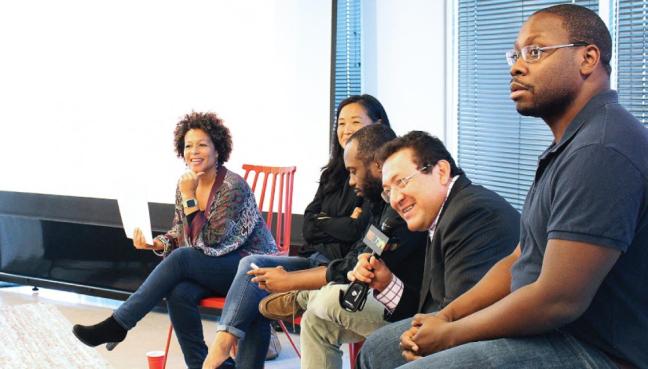
L to r: Allan Edmunds, SOAPBOX for Cultural Equity; Tayyib Smith, Truth to Power; Juntos community members working on the message side of the portable mural.
Never mind the painted donkeys. Art is supposed to do more than just mark that the Democrats are in town.
Let’s be honest, those painted donkeys parked around the city in advance of the Democratic Convention are colorful but make no statement, no demand.
Well, that is they didn’t, until anti-fracking activists added fake droppings to them to protest the silence on fracking in Democratic Party’s platform.
Those “statements” and “demands” were quickly cleaned up (no party poopers here!) and the donkeys were restored to their emblematic “glory.”
Art is supposed to do more than just mark that the Democrats are in town.
I inherited a funky pin from my mother that says “Arte Salva Vidas” — “Art Saves Lives.” An artist who created work in Guatemala during the terrible 36+ year undeclared civil war there, my mother understood that statement in her very bones.
And though my art and circumstance are quite different than hers, I understand it too.
I wear that pin, from time to time, to remind myself that the real power of any (all) of the arts isn’t represented by marketing ploys or branding campaigns, but resides in art’s ability to transform lives, ways of thinking and seeing, and society itself.
Art prompts participation, demands engagement, razes barriers and the walls between us.
I’m happy to note that a number of organizations and artists in our city have scheduled events during the week of the Democratic Convention that — in diverse, unique and very real ways — highlight the formidable transformative power of the arts.
Read the rest of the column and take a look at SOAPBOX for Cultural Equity, Truth to Power and Juntos’ portable mural and march events by clicking here.
The next wave of Latinx politicos in Philly is in the wings, laying the groundwork for the future.
It is the best of times, it is the worst of times for wonkish Latinx folks like me.
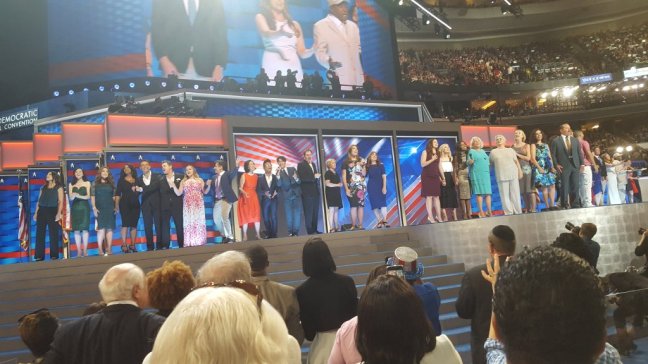
With the Democratic National Convention just two weeks away, there’s a certain amount of exhilaration at the prospect of the Party’s P-A-R-T-Y in Philly.
But it’s also depressing. No, I’m not talking possible SEPTA nightmares (though there is that). It’s just that, as a Latina, I’m unlikely to be seeing more than a handful of mi gente among the ranks of the party’s top pols.
The sad reality is that I’d have a better chance of that at the Republican National Convention. Chew on that for a while (especially given the GOP’s not-so-friendly-to-Latinxs policies). From rising star governors Susana Martinez and Brian Sandoval to former presidential contenders Senators Marco Rubio and Ted Cruz, the GOP has cultivated a deeper Latinx bench — where top pols are concerned — than the Dems.
Oh, sure, cabinet members Thomas Perez and Julian Castro and Congressman Xavier Becerra have been named as potential VP picks for Hillary Clinton, but nobody — not even representation-starved Latinxs — are betting that any of them will actually be selected for the number two post.
[But a] new Latinx political class is still in the wings, laying the groundwork for the future from within the party, behind the scenes, and at the grassroots.
St. Peter Claver is part of the same “sacred ground” as other African American mother churches — Mother Bethel African Methodist Episcopal Church, Wesley AME Zion Church — also located in South Philadelphia.
In 1986, Cardinal John Krol suppressed it. In 2014, it was formally closed. And now, in 2016, the Archdiocese of Philadelphia is petitioning to remove the final bar to its sale — a deed restriction specifying that the real estate at 1212-1222 Lombard Street is held “in trust” for Black Catholics in Philadelphia — unless enough written objections to the petition are received by the Clerk of the Orphans’ Court Division of Philadelphia before a hearing to be held Monday, June 6, 2016, at 1:30 p.m. at Court Room 416 in City Hall.
The property in question is St. Peter Claver, the mother church for Black Catholics in the city since 1892, and a site of real symbolic and historical significance for more than just African Americans.
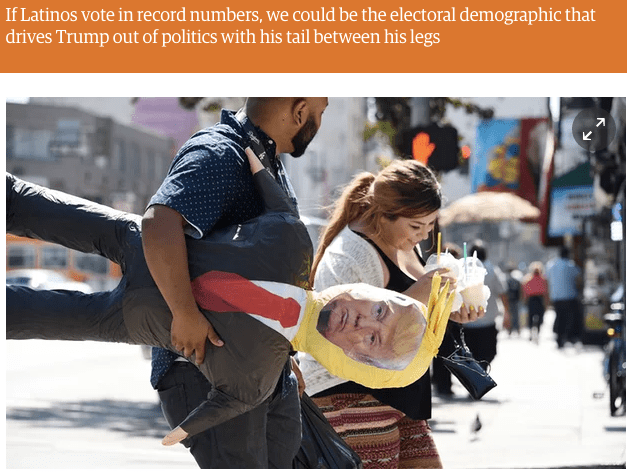
Barely a day goes by when Donald Trump offers Latino something new to get riled up about. In a “Cinco de Mayo” tweet on Thursday, for example, he declared “I love Hispanics!” in the caption to a selfie that showed him digging into a “taco bowl” at his desk.
“This can’t be serious,” said my Mexican cousin. “No words,” wrote a Cuban colleague. “No” and “disgusting” were just some of the other comments my Latino friends – both Democratic and Republican – posted after I uploaded a screen shot of the tweet to my Facebook page.
The presidential candidate started his campaign by saying that Mexicans are rapists and criminals. […]
My first column for Philadelphia Magazine ran last week (read it here).
It isn’t the only place you’ll see my writing (The Guardian US will have a new op-ed piece this week), but it is a place you’ll regularly see my writing … so meet you there every Wednesday!
After four years as the managing editor of AL DÍA, I’ve decided to move on.
One of the best aspects of the job has been covering the amazing Latinx and PoC communities locally and nationally. The wonderful people I’ve met during my years here, coworkers, sources, colleagues, friends and community have made all of it worthwhile.
I, of course, plan to continue to write, edit, comment, and tell our Philadelphia stories — in English and Spanish — as enthusiastically and expansively as a freelancer as I have under the aegis of AL DÍA.
Let’s do coffee and talk about the stories that need writing in our city and nation!
Read Philly Mag’s article about my departure here.
One of the workers at the coffee shop I stop at every morning looks up at me, worry etched on her features.
“What have you heard about the redadas?” she asks.
I’ve just written an editorial about the DHS-ICE raids that, since Jan. 2, have targeted Central American immigrant families with final deportation orders.
“121 people have been apprehended so far,” I tell her. “In Georgia, Texas and North Carolina….”
Elisa (*) shakes her head. “But what have you heard about ICE raids yesterday on 18th and Pine? Or 15th and Spruce?” she insists.
Center City. Not far from where we’re having the conversation.
I can’t answer, I have no information, but it strikes me that I’ve completely misread the expression on her face. It isn’t anything as tame as worry.
Rubio’s story is the American dream. His policies are an immigrant’s nightmare
The more cynical among us might poke fun at, and poke holes into, the idea of “the American Dream” in this era of unprecedented inequality. But the majority of Latino millennials still believe in it, according to a 2014 study contrasting Latino millennials to their non-Latino counterparts.
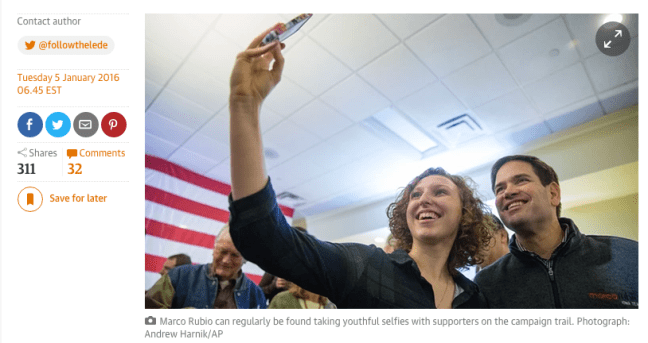
And much as it pains me to say it, Marco Rubio tells the American Dream – child of immigrants; working class childhood; scholarship and community college; law school; marriage and children; an imperfect but aspirational career – story better than any other presidential hopeful currently in contention.
From fiction to long-form journalism to commentary, here are my personal favorites of the hundreds of thousands of words I’ve written this year:
Fiction
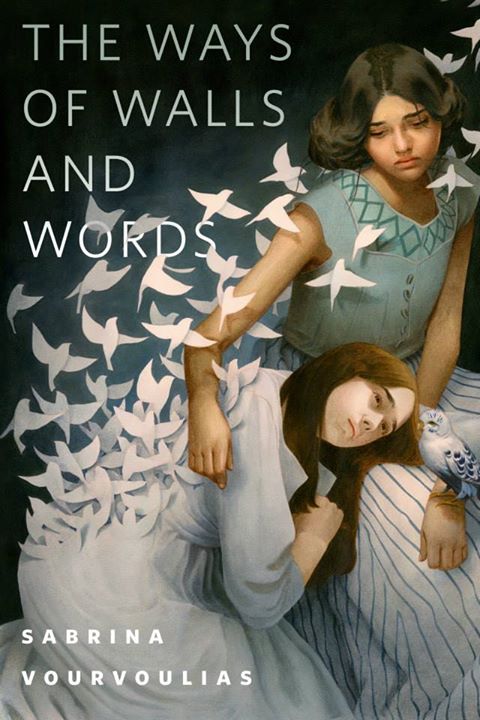
The Ways of Walls and Words was published at Tor.com April 15, 2015, and has been selected for a Best of 2015 anthology. More on that as information becomes available.














 Sabrina Vourvoulias